Purple Kale – 1 g Seeds
€2.00
In stock
Kale (Kale Scarlet – Brassica oleracea) is a type of leafy cabbage from the same family as broccoli and Brussels sprouts. Its leaves resemble those of broccoli, and its flavour is quite strong, a little like cabbage. There are several types, including purple, green, curly and flat-leaved.
Το kale αποτελεί μια τροφή με πλούσια θρεπτική πυκνότητα και αντιοξειδωτικές ουσίες, όπως άλλωστε και όλα τα φυλλώδη λαχανικά. Μια κούπα ψιλοκομμένο kale έχει μόλις 33 θερμίδες, ενώ περιέχει 5 φορές περισσότερη βιταμίνη C από το σπανάκι. Αποτελεί ένα λαχανικό πλούσιο σε πρωτεΐνες, φυτικές ίνες, σίδηρο, μαγγάνιο, φώσφορο, μαγνήσιο, ποτάσιο, ασβέστιο, και άλλες ωφέλιμες ουσίες. Κατέχει πολύ υψηλή θέση στον κατάλογο των θρεπτικών τροφών, ενώ η θερμιδική και διατροφική του αξία το καθιστούν σε απόλυτο ρυθμιστή της πέψης και μια εξαιρετική επιλογή για όσους κάνουν δίαιτα και ακολουθούν ένα πιο υγιεινό διαιτολόγιο.
The story of kale
Many scholars believe the ancient Greeks were among the first to grow this vegetable: they cultivated leafy green cabbages similar to kale, which they boiled and ate. Others believe the Romans came first, as early Roman texts refer to «brassicas», a word that covered wild turnips, cabbages and kale-like plants.
From the Middle Ages onwards, kale spread throughout Europe and Asia, and Italian, Russian and Scottish growers developed many different types. Yet for some reason, after the Second World War, it fell out of fashion and was seen as a simple, humble green – until it made a dramatic comeback in recent years.
Kale today
Abroad, and especially in the USA, kale has become an everyday favourite, regularly featured by food writers and chefs. If you're wondering where to get it, don't worry – you can buy seeds of this famous plant right here.
About kale
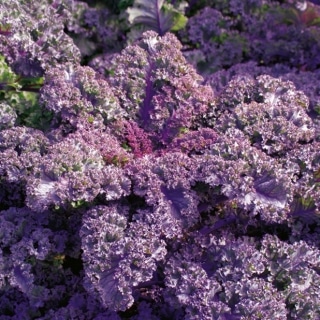
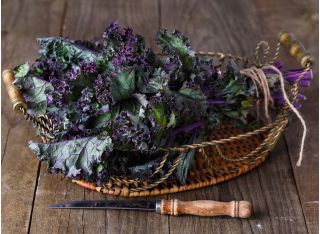
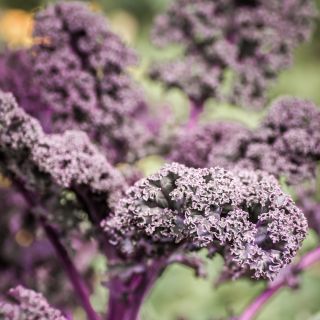
Kale is grown as an annual, though it is actually biennial. It grows 40-60 cm tall and has large, curly leaves. The leaves are green or purple, with a slightly peppery flavour.
It is a very nutritious plant, rich in vitamins A, C, K and B6, as well as minerals such as iron, calcium and potassium.
Kale can be eaten raw or cooked, and is a popular ingredient in salads, smoothies, soups and stir-fries.
Why grow kale?
-
It is very cold hardy and can be harvested right through the winter.
-
You can pick the outer leaves again and again as the plant keeps growing.
- Its purple, frilly leaves are beautiful in the vegetable garden and even in flower beds.
- It thrives in pots as well as in the ground.
Kale is a very versatile plant that can be added to all kinds of dishes – a great way to bring more greens into your diet.
Kale germination and growing instructions are included with every order.
In stock