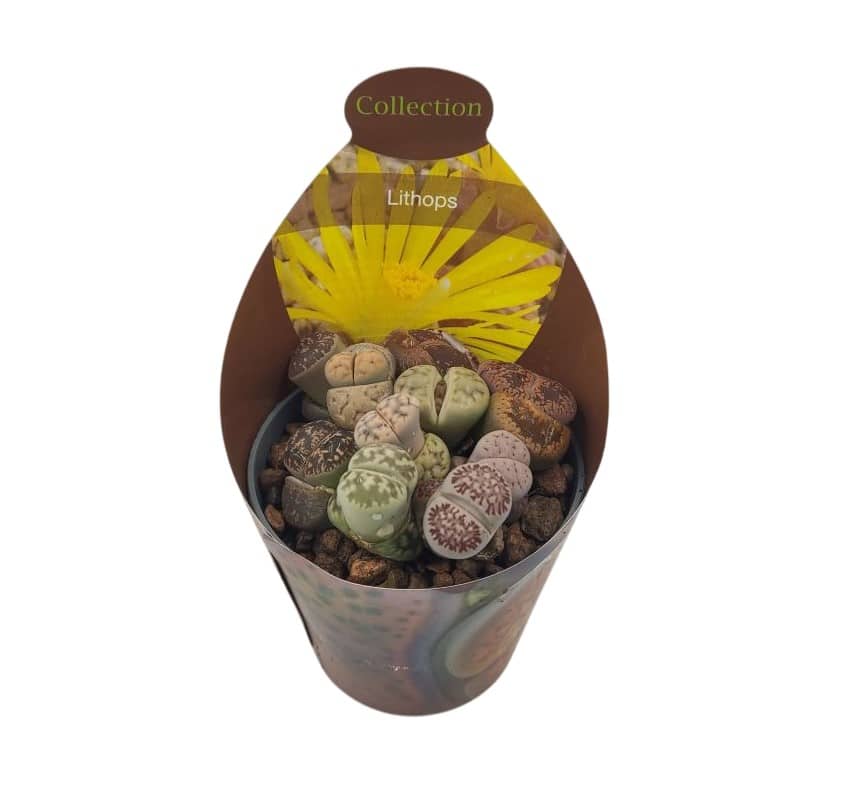

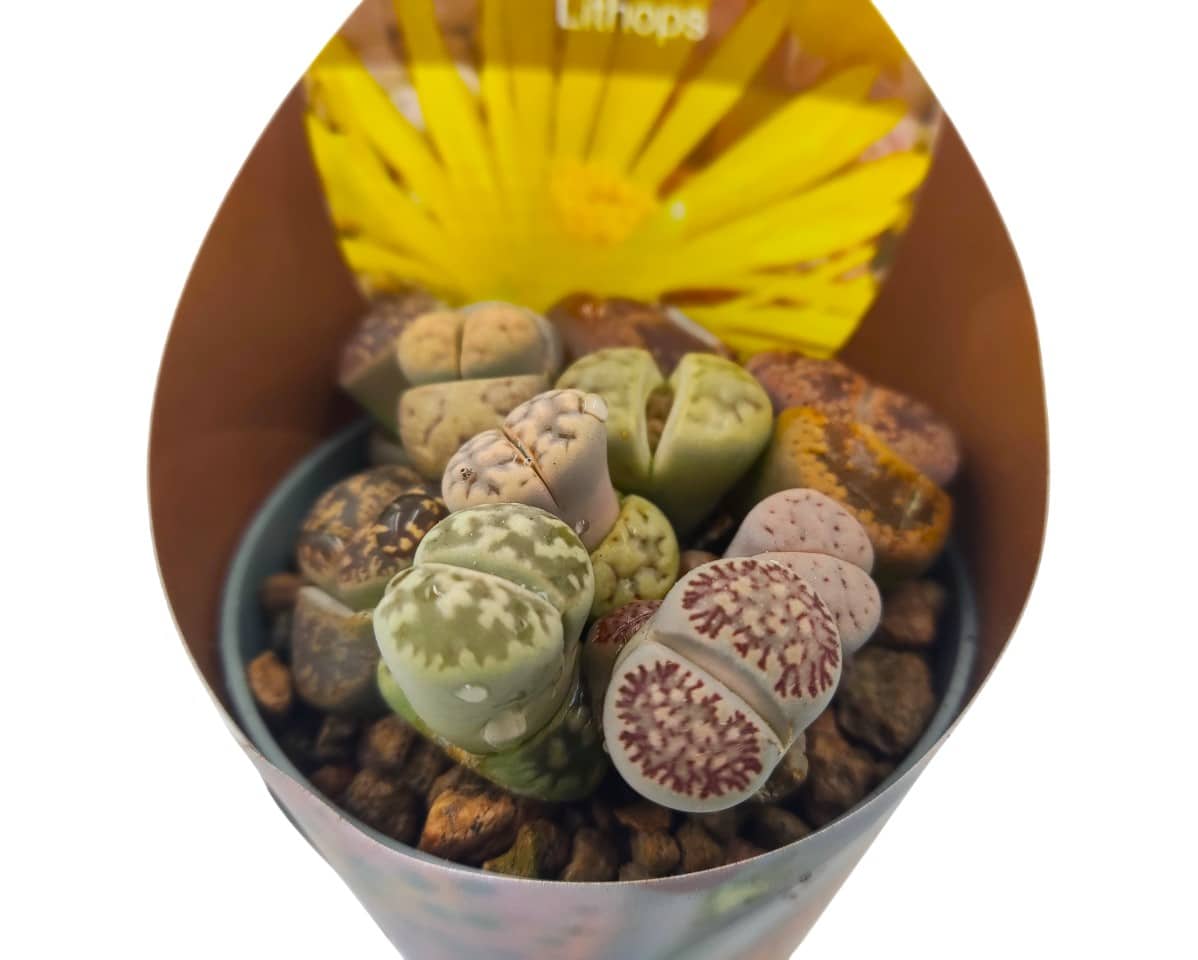
Lithops Succulents – The Colourful Living Stones!
€8.50
In stock
Plant height: 10 cm
Pot diameter: 8 cm
Beautiful lithops in their pot! Known as living stones or pebble plants because they look like little stones, lithops are among the most beautiful and interesting succulents. They also produce lovely flowers and can multiply on their own!
They make a wonderful gift, as lithops, being succulents, need very little care and watering.
What are lithops?
Lithops are a genus of succulents native to southern Africa. The name comes from the ancient Greek words lithos (stone) and ops (face), because their shape and colour resemble small stones.
This unusual evergreen succulent in the form of a stone is hard to spot in its natural surroundings, the perfect camouflage to avoid being eaten by animals.
Lithops stand out from other succulents because they can survive in extremely dry environments, storing large amounts of water in their leaves, which are mostly below the soil surface.
There are more than 30 species of lithops in wonderful colour combinations, including red, green, brown, yellow, pink, purple, blue and grey. The great thing is that their colours vary not only with the variety but also with the light conditions the little lithops receive.
Lithops have a very firm texture: each plant consists of two small fused leaves, with a tiny slit between them from which their striking flower emerges!
Their flowers usually appear between the leaves in autumn. Some lithops have very large flowers that open in the afternoon and close again in the evening.
If you want to encourage flowering, you can use our liquid cactus fertiliser by clicking here
The lithops life cycle
During winter, lithops grow two new leaves inside the old pair, which emerge fully in spring as the previous leaves gradually dry up and finally disappear.
How do I care for lithops?
Lithops love sun and light, which help them grow and flower sooner. They need little care, as they store their own water and need very little watering. They are sensitive to very low temperatures. In a climate like ours, keep them completely dry in winter and only water once the old leaves have dried up and are being replaced by the new pair. From summer to autumn, when they flower, water moderately, ideally by misting around them rather than directly onto the leaves.
Caution! They need well-draining positions. Overwatering causes the plant to rot and die.
In stock