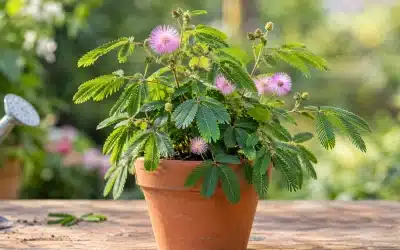
Job's Tears – Key Features
Job's tears, known in Greece as the “Tear of the Virgin Mary”, has the Latin name Coix lacryma-jobi and is a tropical perennial belonging to the grass family (Poaceae).
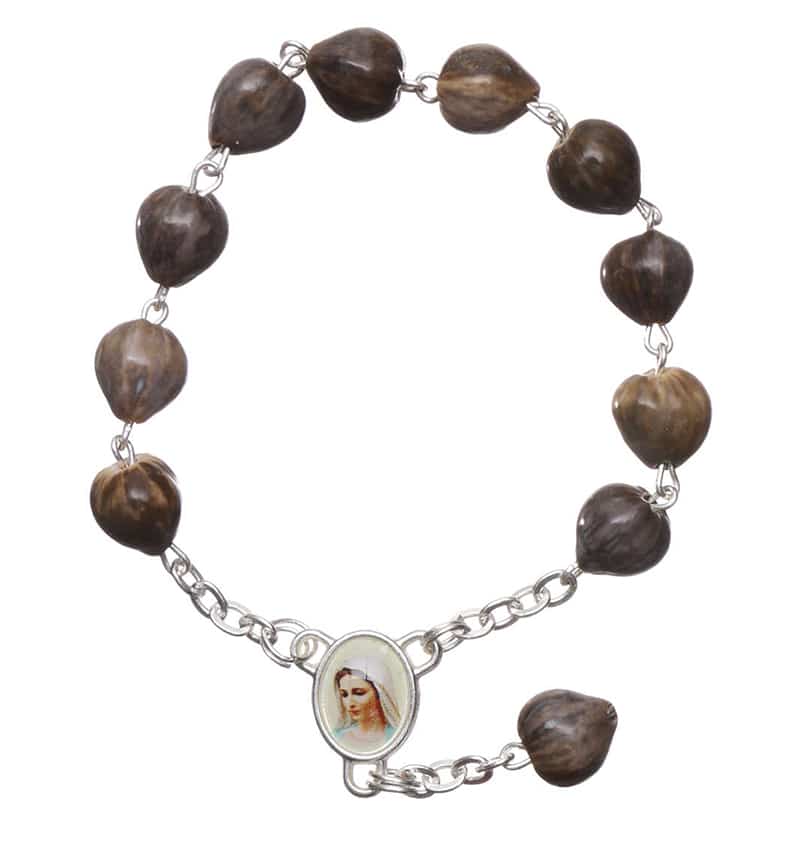
In Puerto Rico the plant is called camándula. In Greece it is traditionally grown by monks, who use its seeds to make beautiful prayer ropes (komboskini).
You can find Job's tears in our shop by clicking here.
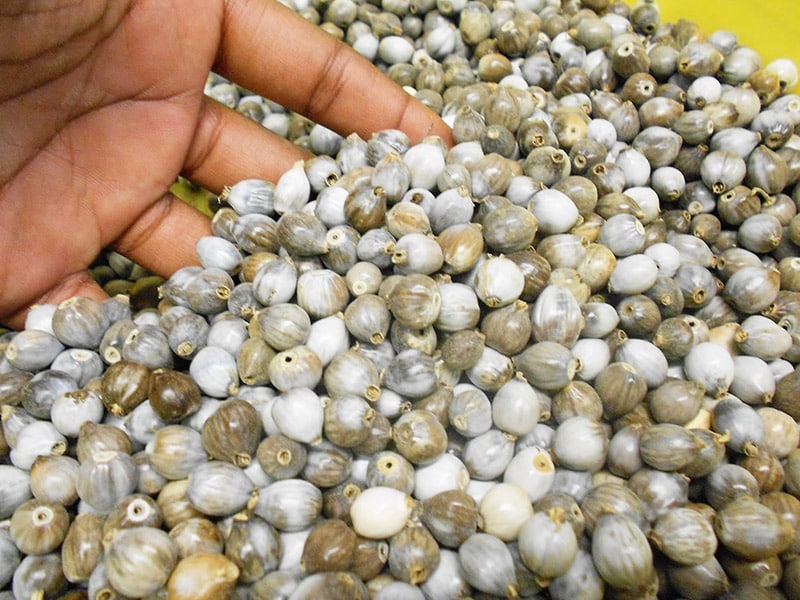
Mainly during the summer months, the plant produces seeds with a very hard, pearly white shell and a distinctive shape that resembles a pearl or a teardrop.
The plants are bushy and fairly tall, reaching around 1 metre. They tolerate low temperatures well and need very little care.
Job's Tears – How the Seeds Are Used
The seeds are used to make necklaces, worry beads, beads, prayer ropes, bracelets and other decorative items.
In Western countries the seeds are used as beads for prayer ropes and bracelets, while in the East they are used as Buddhist rosary beads.
The plant is also used as a food, and various studies have looked into its potential medicinal uses.
In Eastern countries, where it is known as Job's tears, the seeds are eaten much like a cereal grain under the name “adlay”, or added to soups.
The Akha and Karen peoples, who live in the mountainous areas along the Thai–Myanmar border, grow many varieties of the plant and use the beads to decorate their handicrafts.
Among the Akha, the beads are used exclusively on women’s clothing, sewn onto headdresses, jackets, bags and more.
As food – Across East Asia, Job's tears are sold dried and cooked as a grain. The seeds are rich in protein and nutrients, high in dietary fibre, zinc and calcium, and contain micronutrients such as thiamine, riboflavin, vitamin E and niacin. They also provide eight essential amino acids.
Job's Tears – The Story Behind the Plant
According to tradition, there are two versions of the plant’s origin. In the first, it sprang from the tears of the Virgin Mary as they fell to the ground at the foot of the Cross. “It is, in essence, a wondrous transformation of the sorrow and pain of the tears of the Most Holy Theotokos, the Mother of our Lord, into the seeds of this blessed and unique plant.”
In the second version, it grew from the tears of Eve when God cast her out of the Garden of Eden.
A tradition from Mount Athos tells the following story:
“Once, a monk sat in sorrow because he could not learn how to tie a prayer rope.
Then the Virgin Mary appeared to him and asked: ‘Why are you so sorrowful?’
He replied: ‘I cannot learn how to tie a prayer rope.’
So the Virgin Mary gave him these seeds and said:
“Take my tears, grow them, make prayer ropes and say: Lord Jesus Christ, have mercy on me. Most Holy Theotokos, save us.”
The Prayer Rope
Praying with a prayer rope follows a specific method that greatly helps the mind to focus. With each knot that passes between the fingers, the person praying recites in turn: “Lord Jesus Christ, have mercy on me, a sinner. Most Holy Theotokos, save us. Saints of God, intercede for us.” It is also possible to recite only the prayer “Lord Jesus Christ, have mercy on me, a sinner.”
A prayer rope is made for prayer and is not meant to be worn on the wrist as a decorative item like an ordinary bracelet.
The prayer rope is therefore the “tool” that helps monks stay focused during their daily prayer. According to the Orthodox faith, using a prayer rope together with calling upon the Lord is believed to help others as well, and to bring the faithful closer to God.
Finally, the tassel found on most prayer ropes is traditionally said to be used for wiping away tears.
Job's Tears – How to Grow It
It is usually grown in sunny, fertile, well-drained fields with sandy loam soil. Sow when the soil temperature is above 12 °C and, as long as there is no risk of frost, as early as possible to give the plant enough time to emerge and flower. It takes 5 to 5.5 months to flower and ripen, and plants can grow taller than 90 cm by harvest time.