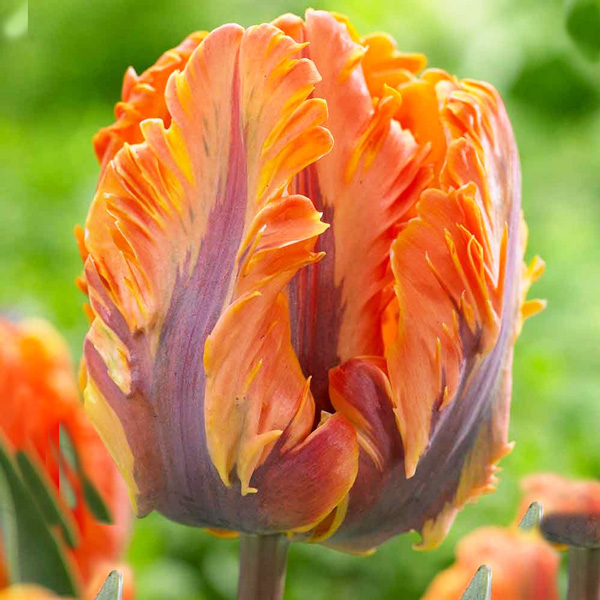

Τουλίπα Parrot Ανάμικτα Χρώματα! 7 Βολβοί
€7.00
In stock
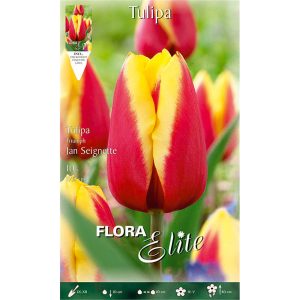
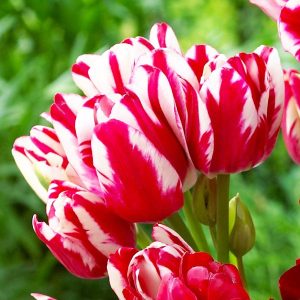
The tulip is one of the most beautiful and widespread ornamental flowers. It's a flowering plant usually grown from bulbs. The flowers are large and striking, in vivid colours, usually red, yellow or white. Depending on the type, tulips range in height from 10 cm to around 70 cm.
In the language of flowers, the tulip symbolises eternal love, joy, kindness, compassion, luck, elegance and grace. Each colour has a different meaning: for example, white tulips stand for forgiveness and red tulips for eternal love.
There are many legends about the tulip, but the best known is that of the Persian prince Farhad and his beloved Shirin. When Farhad believed Shirin had died, he took his own life by riding his horse off a cliff. Where his blood was spilled, tulips grew, and ever since they have symbolised eternal love.
Although the Netherlands is considered "the land of tulips" – and rightly so, as it produces the most tulips every year – the plant originally comes from Asia. Tulip bulbs reached Europe from the Ottoman Empire, and the plant is native to Central Asia, in mountains such as the Tien Shan and the Pamir. Its origins may also explain its name: although not proven, the word "tulip" seems to come from a word meaning turban, which the flower resembles in shape when fully open.
Carolus Clusius was largely responsible for spreading the tulip in the last years of the sixteenth century. He planted tulips in the imperial botanical gardens in Vienna in 1573. After he was appointed director of the botanical garden of Leiden University, he planted a teaching garden and a private garden that included tulips. These tulips led to the famous "tulip mania" and the creation of the Dutch tulip industry!
There are thousands of tulip species and varieties, classified into many different groups. They are usually divided into three main groups: 1) early varieties that flower in March-April, 2) mid-season varieties that flower in April-May, and 3) late varieties that flower in May.
In Greece, tulips are easy and rewarding to grow, and several wild species grow here – some of them found nowhere else in the world!
For best results, combine with one of our fertilisers (use once a month after the first month from planting).
Tulip growing instructions are included
The best time to plant is autumn, from October to the end of November, in a sunny or partly shaded spot. You can use pots or troughs, but if you have a garden, it's best to plant them straight into the ground. Plant the bulbs about 10–15 cm deep (two to three times the bulb's height) and 15–20 cm apart. Don't remove the papery tunic, as it helps protect them against pests. Set each bulb with the point facing up and the broad base facing down, cover with soil and water. Depending on the variety, flowering runs from March to May. Each flower lasts about 15–20 days, so it's worth not planting all your bulbs on the same day: leave a week between plantings for a succession of flowers.
Feeding and watering
Feeding helps your tulip bulbs flower more spectacularly. Don't skip it: start as soon as they begin to sprout and continue until 4 weeks after flowering ends. After flowering, keep watering for 4 weeks, roughly until the leaves die back.
The soil should be light, fertile and very well drained, as tulip bulbs don't like waterlogged soil. If your soil isn't like this, you can improve it by adding some perlite or river sand and mixing everything well.
In stock